Nursery Bedding · A Practical Guide
Choosing an Organic Mini Crib Mattress: Fit, Materials, and Care
A mini crib may be compact, but choosing its mattress calls for careful attention. Dimensions, firmness, materials, certifications, and cleaning instructions all matter—and none should be guessed from a label that simply says “mini.” Here is how to make a thoughtful, well-informed choice for your nursery.
Published November 22, 2026
There is an appealing clarity to a mini crib: a smaller footprint, a more intimate nursery, a sleep space designed to fit where a full-size crib cannot. Yet the words mini crib mattress do not describe one universal size. Models differ, and a mattress that seems close enough on paper may not be compatible with a particular crib. When the sleep space is intended for an infant, close enough is not a useful standard.
For parents considering an organic mini crib mattress, the decision has two parts. First comes the practical question of whether the mattress is designed for the exact crib and meets its safety instructions. Then comes the materials question: what is inside, how are those materials described, and what does any certification actually cover? A considered choice begins with fit and safety—not with a soothing color palette, a natural-sounding name, or a broad environmental claim.
This guide offers a measured way to evaluate those details. It is not a substitute for the crib manufacturer’s instructions or applicable safety guidance, but it can help turn a crowded set of product claims into a clear checklist.
Begin with the crib, not a general size chart
“Mini” is a category, not a guarantee of interchangeable dimensions. Mini cribs may differ in interior length, width, shape, and mattress depth. Some are portable or foldable; others are stationary. A mattress described as mini, compact, or portable may not fit every crib carrying a similar description.
Start with the crib’s instruction manual and the manufacturer’s stated mattress requirements. Check the exact model name or number, then compare those requirements with the mattress specifications and label. If the manual gives a required mattress size or a specific compatibility list, treat that information as more important than a retailer’s general size label.
Measure the interior of the crib only if the manufacturer’s instructions ask you to do so, and follow their method. Measure in more than one place if appropriate: older or assembled furniture may not be perfectly uniform. Do not assume that a mattress will compress, stretch, or settle into place safely. If the manufacturer’s instructions and the product listing appear to conflict, pause and ask the crib or mattress maker for written clarification before use.
It is also worth verifying the mattress thickness and the crib’s permitted mattress height. A mattress that is too thick, or used at an incompatible support setting, can change how the crib functions. This is particularly relevant for convertible, folding, and portable designs, where the maker may specify only certain mattress types or thicknesses.
What a close fit looks like
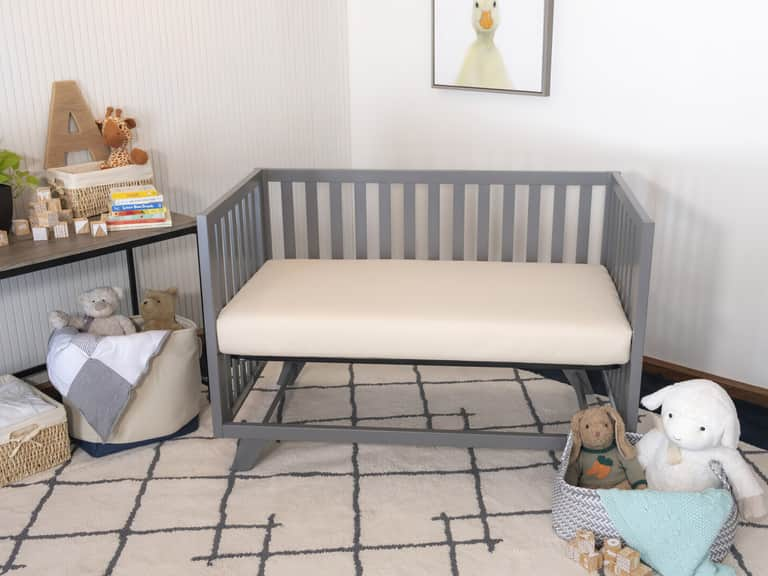
Once the mattress is installed according to the instructions, check the edges and corners. The mattress should sit flat and remain in place, with no conspicuous gaps between it and the crib sides. It should not buckle, bow, or ride upward when fitted as intended. Avoid using rolled towels, blankets, foam strips, or other improvised fillers to close a gap: these do not turn an incompatible mattress into a suitable one.
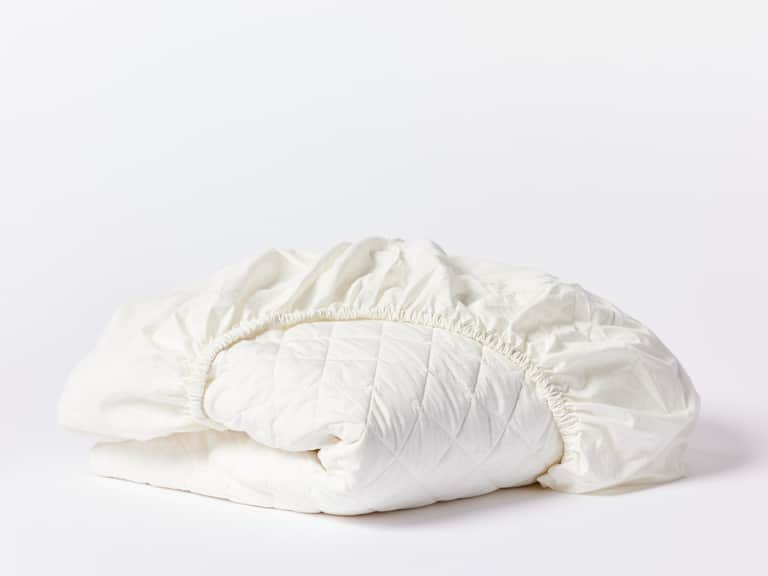
A fitted sheet should also be intended for the mattress’s dimensions and should stay secure. Excess fabric, loose corners, or a sheet that pulls the mattress out of position are signs to stop and reassess. Do not add a topper or pad to alter the mattress size, firmness, or feel. For an infant’s sleep space, follow the crib and mattress instructions and current safe-sleep guidance; keep the sleep surface simple and unobstructed.
Fit is not a styling detail. It is part of using the crib as designed. If the mattress shifts, leaves gaps, or is difficult to install without bending or force, do not rely on appearance alone. Contact the manufacturers and confirm compatibility before placing a baby in the crib.
Firmness and construction are functional details
Organic does not mean soft, and a natural-material description does not tell you whether a mattress is appropriate for a particular crib or age. For an infant, the relevant product should be designed for infant use and provide the firm, flat sleep surface called for by applicable safe-sleep recommendations and the crib manufacturer. A plush surface may feel inviting to an adult, but comfort by touch is not a reliable way to assess suitability.
Mini crib mattresses can use different constructions. Some are made with foam; others may use springs, cotton, latex, or combinations of materials. Ask what forms the core, what sits above it, and whether any layers can shift. If the mattress has a removable cover, find out whether it is intended to be removed for laundering or only for service. Construction information should be specific rather than relying on phrases such as “natural comfort” or “clean sleep.”
Weight, foldability, and handling can matter in a small or shared room. A portable crib’s instructions may restrict mattress types or require a particular pad. Even when two mattresses have matching dimensions, that alone does not establish that both are approved for use in the same crib. Compatibility and safe use take precedence over convenience or material preference.
Reading organic materials with precision
Organic crib mattress materials commonly include cotton, wool, and latex, but the word “organic” can refer to one component rather than an entire finished product. A mattress might have an organic textile cover around a different filling, or contain certified organic fiber in only one layer. Look for a component-by-component description: cover fabric, batting, core, barriers, thread, and any waterproof layer.
- Organic cotton: Often used in covers, quilting, or padding. Ask whether the claim applies to the fabric, the filling, or both, and whether the material is certified.
- Wool: May appear as batting or a quilted layer. Review its source and care needs, and confirm that the complete mattress remains appropriate for the intended crib and age.
- Latex: A material derived from rubber tree sap, used in some mattress components. If latex is present, check the product’s specific disclosure and consider any household sensitivities. “Natural latex” and “organic latex” are not interchangeable claims.
- Waterproof layers: These can help protect a mattress, but their material and care instructions vary. Look for a clear description rather than assuming that “waterproof” identifies the substance used.
Material preferences are personal, and organic sourcing does not by itself establish that a product is safer, more durable, or better suited to every family. A useful description lets you understand what is present, what is absent, and how the mattress is meant to be used. If a product page leaves a significant component unexplained, ask for details rather than filling in the gaps with assumptions.
Certifications: useful, but specific
Certifications can provide structure to claims, but their meaning depends on the standard, the scope, and the product components covered. A mark on a website is not automatically proof that every part of a mattress is organic or that the complete product meets every possible health or safety requirement.
GOTS, for example, is a textile standard with requirements that address organic fibers and aspects of processing. When a product claims GOTS certification, check which item and components are covered and whether the certification can be verified through the standard’s official resources. GOLS is associated with organic latex; it should not be treated as a certification for cotton or for an entire mattress unless the specific scope says so. OEKO-TEX certifications concern testing under particular criteria, but they are not the same thing as organic certification.
When assessing a claim, look for the name of the certifier, the relevant standard, the certificate or license information, and the exact product or material included. “Made with organic materials,” “organic cotton cover,” and “certified organic mattress” make different claims. A responsible brand should be able to explain the difference plainly.
Certification is one part of due diligence. Also review the crib’s instructions, the mattress label, applicable safety information, and the care guidance. No fiber certification substitutes for correct dimensions, proper installation, or following the product’s intended use.
Care instructions deserve a place in the decision
Nursery bedding faces spills, humidity, and frequent changes, so care should be considered before purchase. Check whether the mattress itself can be wiped clean, whether its cover is removable, and whether any removable piece is machine washable. A washable cover does not necessarily mean that the mattress core can be washed. Immersing or soaking a component against its instructions may damage it or leave moisture trapped inside.
Ask how the mattress should be dried and how quickly it must be returned to use after cleaning. If it has a waterproof surface, confirm which detergents and cleaning products are permitted. Strong bleach, high heat, solvents, or abrasive scrubbing can damage certain materials or finishes. Follow the maker’s label rather than applying a general bedding routine to a product with different construction.
For everyday maintenance, use only the sheet and any accessories permitted by the crib and mattress instructions. Change damp bedding promptly, and make sure surfaces are fully dry before replacing a sheet. Keep the room appropriately ventilated, and inspect the mattress after cleaning for damaged seams, tears, peeling, unusual odors, or areas that no longer lie flat.
Do not assume that a mattress protector is automatically compatible. If considering one, check that it is specifically suitable for the crib mattress, fits securely, and does not interfere with the flatness or fit of the sleep surface. For an infant, avoid adding products that the crib maker or safe-sleep guidance does not permit.
A thoughtful inspection routine
Before first use, unpack and install the mattress in accordance with both sets of instructions: those for the crib and those for the mattress. If the manufacturer specifies an airing period, follow it. A mild new-product scent may occur, but persistent or unusual odors should be raised with the maker; do not mask them with fragrance sprays, which can introduce additional substances and are not a substitute for resolving a product concern.
Check that the mattress is the correct model, that its label is present, and that the stated dimensions and care details match the information supplied at purchase. Keep the manual and warranty information somewhere accessible. If the product has a manufacturing date, lot number, or registration details, record them. This makes it easier to contact the manufacturer if questions arise later.
Inspect the mattress periodically and after any significant spill. Look for a torn cover, exposed filling, damaged waterproofing, compressed areas, or a change in shape. A mattress that no longer fits securely or lies flat should not be kept in use on the assumption that a sheet will hold it in place. Contact the maker for advice on repair, replacement, or safe disposal.
Questions to ask before choosing
A short list of precise questions can make product research more useful than a long scroll through marketing copy. Ask the crib manufacturer which mattress dimensions and thicknesses are permitted. Ask the mattress maker to confirm compatibility with the exact crib model, not merely the general category. Then clarify the materials and certification claims in writing.
- What are the mattress’s exact dimensions and thickness?
- Is this model specified for my crib’s make and model?
- What are the core, cover, batting, and waterproof components made from?
- Which components, if any, are covered by each named certification?
- What is the approved cleaning method, and can any cover be removed?
- Are mattress pads, protectors, or fitted sheets restricted by the crib instructions?
- What should I do if the mattress does not sit flat or leaves a gap after installation?
Clear answers are a sign of useful product information. If details remain vague—particularly about fit, construction, or certification scope—compare the claims with the manufacturer’s official documentation and ask for clarification before deciding.
A final checklist for the nursery
Choosing an organic mini crib mattress need not be a contest between ideals. A material profile that aligns with your preferences is valuable only when the mattress is also the right match for the crib and can be cared for as intended. Let the practical questions lead, then consider the provenance and certification of the materials with the same attention to detail.
- Confirm the exact crib model and its required mattress specifications.
- Match dimensions and thickness using the manufacturers’ instructions.
- Check that the installed mattress lies flat and fits without conspicuous gaps.
- Choose a product designed for the crib and intended age of use.
- Read material claims component by component, and verify certification scope.
- Understand the cleaning method before the first spill or laundry day.
- Follow current safe-sleep guidance and keep the crib’s sleep surface free of unapproved additions.
In the end, a well-chosen mini crib mattress is less about a single fashionable label than a chain of sound decisions: the right fit, transparent materials, relevant documentation, and care that preserves the product as designed. That is the quiet confidence a nursery deserves—considered, calm, and grounded in the details.